
Emerald Ash Borer in the Portland Area
Emerald ash borer (EAB) is now established in the Portland metro area. Untreated ash trees it reaches almost always die, but healthy trees can be protected.
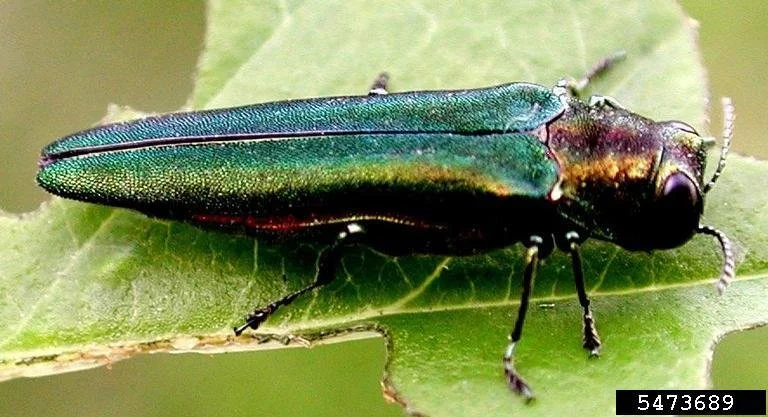
EAB is an invasive beetle from Asia. It has killed hundreds of millions of ash trees across the eastern and midwestern United States. It was first found in Oregon in 2022, in Forest Grove. In 2025 it turned up in SE Portland, near Beaverton, and near Oregon City. In June 2026 it was confirmed in Tualatin, Newberg, and Silverton.
If you have an ash tree in Lake Oswego, Beaverton, or SW Portland, now is the time to decide whether to protect it. Treatment works best before the tree shows serious damage.
Tree Preservation
Is my tree an ash?
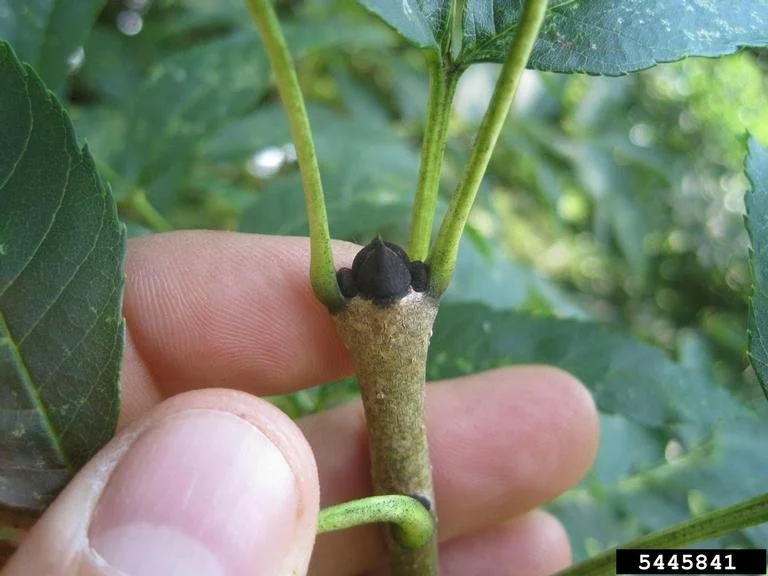
Ash trees have leaves made of 5 to 9 leaflets arranged in pairs, with branches and buds directly opposite each other. Mature bark has a diamond-shaped, interlocking ridge pattern. Common ash trees in local yards and streets include green ash, white ash, and the native Oregon ash.
EAB can also attack white fringetree and possibly olive, which is why the state quarantine includes both. If you're not sure what you have, I can identify it during a visit.
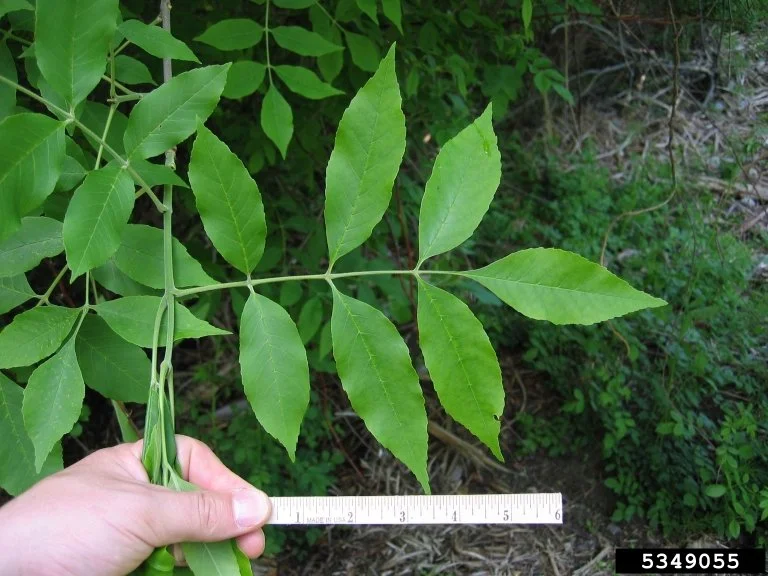
Rob Routledge, Sault College, Bugwood.org
Keith Kanoti, Maine Forest Service, Bugwood.org
Tree Hazard & Risk Assessment
Signs of emerald ash borer
EAB larvae feed under the bark, cutting off the tree's flow of water and nutrients. By the time you notice symptoms, the tree may have been infested for 2 or more years. Look for:
Thinning canopy, starting at the top of the tree
D-shaped exit holes about 1/8 inch wide in the bark
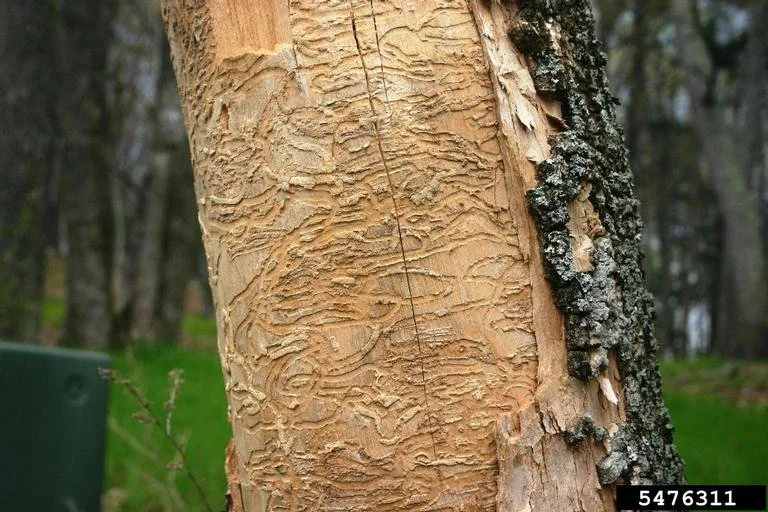
S-shaped tunnels under loose or split bark
Woodpecker damage, which shows up as light-colored patches where birds have stripped outer bark to reach the larvae
Vertical bark splits
Shoots sprouting from the trunk or the base of the tree
Some of these signs have other causes. Drought stress, the native lilac/ash borer, and ash bark beetles can all look similar. A professional diagnosis tells you whether you're dealing with EAB before you spend money on treatment.
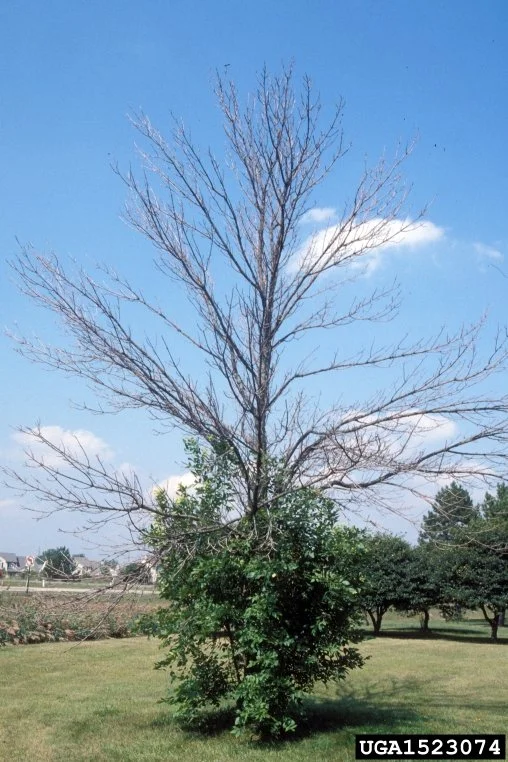
Daniel Herms, The Ohio State University, Bugwood.org
Leah Bauer, USDA Forest Service Northern Research Station, Bugwood.org
Christopher Asaro, Virginia Department of Forestry, Bugwood.org
Your options
Treat and protect the tree
For a healthy, valuable ash tree, preventive treatment is usually much cheaper than removing a large dead tree later. Oregon agencies recommend treatment only for trees in good condition, before damage sets in.
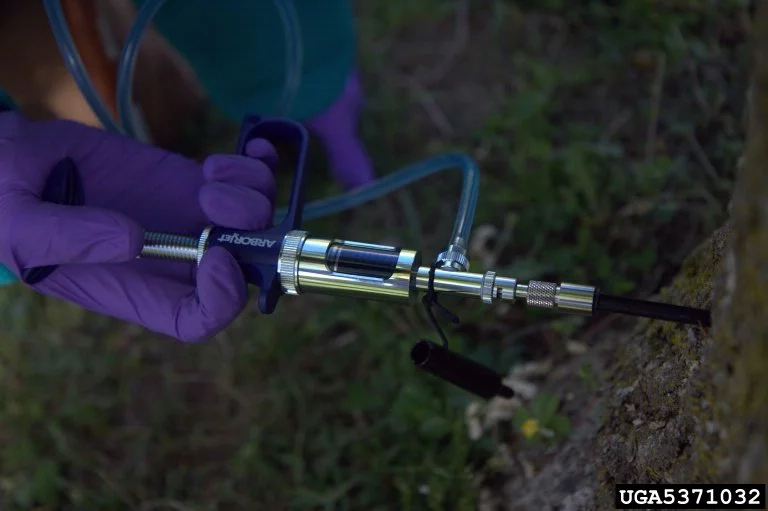
Trunk injection with emamectin benzoate is the treatment Oregon agencies point to. I inject the product at the base of the trunk, and the tree carries it up into the canopy. One treatment protects the tree for 2 to 3 years.
Soil-applied treatments can be an option for smaller trees and need to be repeated each year.
Timing matters. Treatments are applied in spring and early summer, after the leaves come out and while the soil is moist.
Treatment is most effective when the tree has lost less than about 30% of its canopy. Past that point, the tree may not be able to move enough product to recover.
I hold an Oregon Department of Agriculture pesticide applicator license, so I can assess your tree and do the treatment myself.
Remove and replant
Removal makes sense when an ash is already in serious decline, is planted somewhere it will outgrow (such as under power lines), or isn't worth the cost of ongoing treatment to you. Infested ash wood becomes brittle quickly, so it's safer and cheaper to remove a declining tree before it dies. I can recommend replacement trees that are not susceptible to EAB.
Wait and monitor
If your tree is small or of low value to you, monitoring may be reasonable. Keep in mind that once EAB arrives in a neighborhood, untreated ash trees usually decline within a few years.
Quarantine rules
The Oregon Department of Agriculture has an EAB quarantine in Multnomah, Clackamas, Washington, Marion, and Yamhill counties. It limits moving ash, olive, and white fringetree wood and plant material out of the quarantine area.
Don't move ash firewood. Buy or cut firewood within 10 miles of where you'll burn it.
If I remove an ash tree for you, I handle the wood according to the quarantine rules.
If you think you've found EAB somewhere new, report it to the Oregon Invasive Species Hotline.
Frequently asked questions
Is emerald ash borer in Lake Oswego? It has been confirmed in nearby Tualatin and near Beaverton, and Clackamas County is under quarantine. Ash trees in Lake Oswego should be considered at risk now.
How much does ash tree treatment cost? The cost depends mostly on the size of the trunk. For most trees, treating every 2 to 3 years costs much less than removing a large tree. I'll give you a written quote after looking at the tree.
Is trunk injection safe? Trunk injection puts the product directly inside the tree. Nothing is sprayed into the air or onto your lawn, which keeps exposure for people, pets, and pollinators low compared with spraying. Ash trees are wind-pollinated, so bees don't depend on them.
My ash already looks thin. Is it too late? Not necessarily. Thinning can have other causes, and trees with moderate damage can sometimes still be saved. An assessment will tell you.
Pacific Tree Preservation serves Lake Oswego, Beaverton, West Linn, Tigard, and SW Portland, plus the wider Portland metro area.